The Indian technology industry got its start running call centers and doing low-level IT work for western firms. Then, in the 2000s, it started taking on higher-level IT tasks, offering management consulting services, and performing sophisticated R&D. Now there is another transition happening, one far more significant: a transition to development of innovative technology products. Instead of providing IT services as the big outsourcing companies do, a new breed of startups is developing high-value products based on intellectual property. The Indian industry group NASSCOM estimates that, in 2008, the country’s software product revenues totaled $1.64 billion. It forecasts that this will grow to $11 billion per year by 2015. -Vivek Wadhwa (TechCrunch)
Here are some of the hottest innovators from India and their story.

K. Chandrasekhar of Forus Health.
Chandrasekhar learned that that the vast majority of the 12 million people in India who are blind could have maintained their sight if only their problems had been diagnosed and treated on time. The diagnostic equipment for a single hospital cost at least US$60,000—which put it out of the reach of most regional clinics—and required ophthalmologists to perform the diagnosis. Chandrasekhar and Forus cofounder Shyam Vasudev decided to leave their jobs as senior executives at NXP Semiconductor (an offshoot of Philips) to create an affordable, all-in-one, intelligent pre-screening device that is non-invasive and can be used by minimally trained technicians in rural India. The device provides an indicative report in 10 minutes for five major eye-related problems, including diabetic retina. This frees the doctor up to treat patients rather than administer tests. The product costs less than $15,000, and Forus expects the price to drop to half that in volume production.
K. Chandrasekhar of Forus Health.
Chandrasekhar learned that that the vast majority of the 12 million people in India who are blind could have maintained their sight if only their problems had been diagnosed and treated on time. The diagnostic equipment for a single hospital cost at least US$60,000—which put it out of the reach of most regional clinics—and required ophthalmologists to perform the diagnosis. Chandrasekhar and Forus cofounder Shyam Vasudev decided to leave their jobs as senior executives at NXP Semiconductor (an offshoot of Philips) to create an affordable, all-in-one, intelligent pre-screening device that is non-invasive and can be used by minimally trained technicians in rural India. The device provides an indicative report in 10 minutes for five major eye-related problems, including diabetic retina. This frees the doctor up to treat patients rather than administer tests. The product costs less than $15,000, and Forus expects the price to drop to half that in volume production.

Ajit Narayananand (29 years)
Innovator of the Year
Ajit Narayanan, 29, exemplifies the spirit of innovation in India. Toiling for a few years at a startup, Invention Labs Engineering, incubated at the IIT (Indian Institute of Technology) Madras, Narayanan has developed an alternate communication system for millions of people who remain incommunicado with the society due to their disabilities.
Avaz
There are an estimated 10 million people in India who suffer from speech impediments. They may not have speech but they have a lot to say. And they can benefit from Narayanan's device. AVAZ is a communication device for people with speech disorders such as cerebral palsy, autism, mental retardation, and aphasia.
Avaz works by converting limited muscle movements, such as head or finger movements, into speech. His invention broadly falls under the category of Augmentative and Alternative Communication (AAC) technologies.

Humanitarian of the Year
Novel method of screening for eye disease in children under the age of five.
An estimated 1.4 million children in the world are blind and 90 percent of them are found in developing countries. In India, these children often face a lifetime of disability.
Poor vision affects every aspect of their lives - economic, social, and psychological. Ultimately, it undermines their function and acceptability in their families and in society.
If children with visual disabilities were detected sufficiently early, approximately 40 percent of such cases could be prevented or treated and the remaining could be rehabilitated to minimize the child's handicap.
In India, there are many hurdles in detecting, diagnosing, and treating such children. There is no organized screening program focused on identifying children under the age of five for sight-threatening eye conditions. The World Health Organization reports the lack of adequate community-based, primary-care screening programs as an important barrier to improvements in current morbidity and mortality rates due to eye-related diseases.
A novel method for eye-testing
Third year medical student at University of Montreal, Montreal, Canada, Alefia Merchant has developed a novel method of screening for eye disease in children under the age of five.
Merchant developed the method during September 2009 till June 2010 as part of her community pediatric ophthalmology project at the Narayana Nethralaya Postgraduate Institute of Ophthalmology, Bangalore, Karnataka. She was the co-investigator of the project along with Ashwin Mallipatna who is consultant pediatric eye surgeon at Narayana Nethralaya, Bangalore.
Merchant's method exploits existing, low-cost, and readily-available digital camera technology to photograph a child's eye for signs of vision-threatening disease as an alternative to standard medical technology in current use.
 Gautam Kumar (26 years)
Social Innovator of the year
System to detect gas leakages - RoboticWares, Bhubaneshwar
Passionate to innovate, Gautam Kumar has developed a system that detects leakage of liquid petroleum gas (LPG) and sends warning messages to people connected with the device over their cell phones. He calls the device Suraksha which means "safety" in Hindi.
Kumar along with his cofounder Kushal Nahata got the idea to develop the device when he read about a gas leakage accident in Bhubaneshwar in which a few people lost their lives. "The incident reminded of a similar but bigger accident that occurred near Kushal's parents' house in Chandni Chowk, New Delhi, a few years back," recalls Kumar. The duo immediately felt the need of an alarm system which could warn people in time to save lives or even avoid such hazards before it is too late.
The device from Roboticwares is based on the olfactory kind of sensors which enables an intelligent machine to detect a certain type of smell and based on preset rules perform the actions which are programmed in it. Kumar's Suraksha can be configured to communicate with a maximum of five people by registering their cell phone numbers on the device.
Improving software quality using automated verification
Microsoft Research, Bangalore
With software becoming all pervasive in our daily lives, it must become all the more reliable and shouldn't crash or behave unexpectedly. And the way to address this is through automated verification of programs.
Though automated verification can significantly improve the quality of software with little manual effort, the available verification tools have been used to test sequential programs. This is a concern as modern software is invariably concurrent.
The problem of automatically verifying concurrent programs is two-fold: one has to explore different inputs to the program, and also explore different interleavings that happen between threads in the program for each input.
Akash Lal's work shows that verification of real-world concurrent programs is possible. His innovation bridges the worlds of sequential and concurrent programs.
 Akshay Shah (29 years)
iWeb Technology Solutions, Mumbai
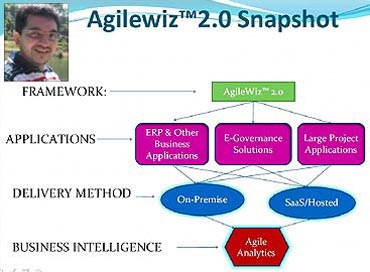
A business process management generator which can create applications on the fly.
While working in Pune for enterprise resource planning software maintenance and support, Akshay Shah realised that the popular ERPs available in the market were very complex in nature.
He felt the need to develop a software which could churn out on-demand and cost effective applications for business process management. He developed a software platform called AgileWiz, a short form of agile wizard.
The Agilewiz technology is based on the concept of platform-as-a-service which can build fully functional application modules by feeding appropriate metadata as input.
The Agilewiz has a business rules management system (BRMS) which ensures that implementers do not have to repeatedly rely on software principals for critical but necessary customizations of the product.
Shah says that the platform has been designed from ground up and is technology independent. Any ERP, e-governance, hospital management, or a payroll application can be developed quickly using Agilewiz.

Innoz Technologies, Haryana
A mobile based search engine to deliver information on any topic.
Deepak Ravindran calls it the "instant cup of knowledge". His mobile based service, SMSGyan, promises information on almost any topic to the user on his mobile phone without asking him to click on any link.
There are a host of services existing which would give users information on certain topics on their mobile phones but most of these are either limited to a sector, such as railway enquiry, or they send links to the user's mobile phone asking the user to click on them to access desired information.
Such services have not become very popular with the vast majority of the people because they don't have GPRS connection on their mobile phones or the connection is weak. Though India has almost 700 million users today, the smart phone penetration still remains very low.
Gyan means "knowledge" in Hindi, and the SMSGyan provides myriad information services which include dictionary, encyclopaedia, job search, health, stock market, and more via text messages.
The idea was seeded when one day, Hisam, one of the founders of Innoz Technologies, was in transit and wanted to know the meaning of a word and found that his basic phone was of no use to get the information. Since the phone had no application and no Internet connection to go to a dictionary and enquire, Hisam had to do without knowing the meaning.
"This kind of a thing has happened to each one of us and it can be frustrating," says Ravindran. The team then sat down to put together an answer engine which would give users answers to various kinds of queries from anywhere at any time.
The SMSGyan platform can work with any number of databases or resources. It delivers mobile-optimized results. These text results support upto a maximum 500 characters of information across all operators in India.
A user would have to type an SMS with the keyword GYAN followed by the query and send it to 56161. For example, to know the stock price of Infosys, a user would have to type "GYAN Stock Infosys" and send it to the specified number.
Aishwarya Lakshmi Ratan (29 years)
Microsoft Research, Bangalore
A hybrid paper, pen, and digital slate solution for a low-cost digital record management system.
Technologies that exist today either require users to use a digital pen and a digital slate, which are not very user-friendly, or they require users to digress totally from pen and paper to a personal digital assistant or a computer-based interaction.
All of these technologies are expensive as compared to a pen and paper medium. And therefore, such technologies have not taken off in countries like India where the masses are still comfortable using pen and paper to write in their regional languages.
Aishwarya Ratan has come up with a low-cost digital system which lets the users have the convenience of using a normal pen and a plain paper to record data and instantly store it in the digital form.
This solution has been piloted with self help groups (SHGs) who microfinance and maintain records of each person's savings and loans. Conventionally, the data was recorded at a site on papers and it was later converted into digital data.
Aishwarya's team chose a low-cost digital slate and pen prototype device that allows handwritten entries, made with the pen on ordinary paper forms placed on the device, to be instantly digitized.
 Harit Soni (27 years)
Ecolibrium Energy, Ahmedabad
Smart grid technology to optimise the use of electricity in India.
Supported by the Ministry of New and Renewable Energy of the Government of India, Ecolibrium is a smart-grid startup aimed at enabling consumers to manage power consumption in real-time. A humungous amount of electricity is wasted because of the lack of a feedback loop between suppliers and consumers.
India has a power deficit of 12 percent with almost 300 million people living without electricity. Transmission losses amount to 1.5 percent of India's gross domestic product. Harit Soni, founder of Ecolibrium Energy, opines that achieving energy efficiency is more cost effective and environment-healthy than setting up new power plants to fulfil India's power demands.
India has a power deficit of 12 percent with almost 300 million people living without electricity. Transmission losses amount to 1.5 percent of India's gross domestic product. Harit Soni, founder of Ecolibrium Energy, opines that achieving energy efficiency is more cost effective and environment-healthy than setting up new power plants to fulfil India's power demands.
At Ecolibrium Soni has led the development of indigenous smart grid technologies. The smart grid is essentially addition of communication and application layers on top of the existing power transmission layer. Though smart grid technologies are available, India needs a customized solution to address the transmission and distribution losses.
 Krishna Gopal Singh (29 years)
EnNatura Technology Ventures, Delhi
Eco-friendly printing ink that reduces harmful emissions by almost 99 per cent.
The offset printing industry emits 500,000 tons of volatile organic compounds (VOCs) annually into the atmosphere.
These emissions are huge contributors to global warming and are also detrimental to the health of millions of workers in the global print industry.
The major source of pollution is the petroleum components in such inks which are released in the atmosphere as harmful emissions during the drying and the washing processes of printing, causing photochemical smog formation and ozone depletion.
Printers who are exposed to regular emissions are in danger of acquiring respiratory ailments such as tuberculosis and even cancer. The current eco-friendly solutions available in the global market are either expensive or do not produce the same quality output as the widely-available petroleum based inks.
Krishna Gopal Singh, chief technology officer of Ennatura Technology Ventures, Delhi, has formulated a biodegradable printing ink which is mainly composed of the resin, the solvent which is used to dissolve the resin, the color pigment, and additives.
Singh and his team created a functional resin from renewable feedstock so that all the chemical reactions involved in the printing process don't result in emission of volatile organic compounds.
This particular kind of resin is pH-sensitive and the inks formulated with it print well with mildly acidic fountain solutions used in lithography printing.
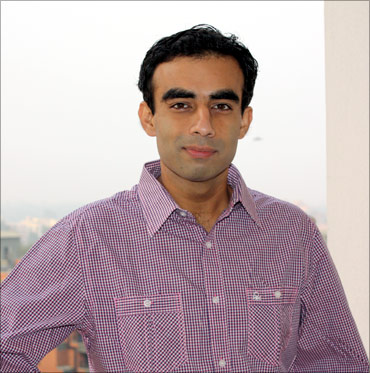 Manav Bhatia (32 years)
Alcatel-Lucent, Bangalore
Securing the Internet service provider's routing network.
Routing in the Internet is a very complex task and routing protocols play the key role in ensuring that Internet works in a sane way.
And Manav Bhatia's security and authentication algorithms help in making the routing protocols more secure and less susceptible to attacks, such as Denial of Service (DoS) or traffic redirection, so that data transfers happen seamlessly over the Internet.
Having spent a considerable amount of time studying and working in routing protocols, Bhatia started noticing that protocols were not as secure as they were always thought to be.
He looked closely at how these protocols used the cryptographic authentication mechanisms and saw vulnerabilities in almost all the popular protocols deployed in the service provider and enterprise networks. Bhatia worked on the mechanisms that were defined by the Internet Engineering Task Force (IETF) standards and fixed the vulnerabilities.
The IETF is a global community of network designers, operators, and researchers responsible for producing technical specifications for the evolution of the Internet architecture and smooth operation of the Internet.


